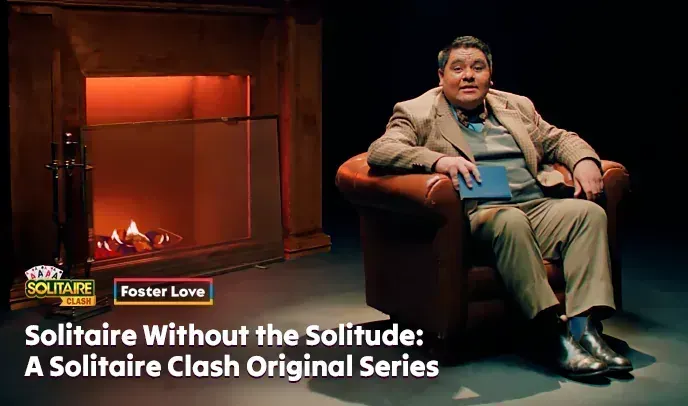
Solitaire Without the Solitude: Solitaire Clash Video Series Episode 2 — The 90s Office Era
Game Events Jan 29, 2026
Every story moves forward.Solitaire just happens to do it quietly, and preferably without being noticed.Episode 2 of Solitaire Without the Solitude, the mockumentary-style video series from Solitaire Clash, leaves the 1700s French prison solitaire history behind and enters a new environment of cubicles, desktop computers, and the universal art of looking busy.The setting changes, but the tone remains the same, as this documentary is still delivered with complete seriousness and an impressive level of confidence in its own conclusions.Episode 2 explores a bold idea: Solitaire didn’t disappear after its early days of isolation. Rather, it infiltrated the offices of the 1990s, where people sat side by side in cubicles. Yet even here, Solitaire remained what it had always been: a solitary game.Surprising? Watch Episode 2 to see how Office Solitaire quietly took over the 90s workplace.
The Serious Presentation of Office Solitaire
Episode 2 is driven by full commitment. The direction remains calm and controlled, allowing the idea to unfold in a clean, professional presentation. Still, nothing is pushed too far. And the tone? Still serious.Leo González still narrates with complete seriousness and confidence, treating everyday office habits as an act of productivity and agency. Solitaire isn’t shown as a distraction, but as a solution — a way for workers to maintain the status quo while getting very little done. We’ve all been there.In Episode 2, Solitaire Without the Solitude doesn’t question how Solitaire ended up at work — it simply documents it, with complete certainty.
How the Office Solitaire Story Unfolded
Episode 2 begins before the office, before the computer, before the desk.Solitaire, we’re told, got popular in the 1800s, back when people spent a lot of time waiting, especially in winter, while staying inside and hoping someone would come back with food rations. Sometimes they did, sometimes they didn’t, but Solitaire was already there, with the cards laid out and ready at the table. A woman waits. While playing Solitaire, of course.By the 1990s, the game itself didn't really change, even though everything around it had. Now it shows up in offices, surrounded by cubicles, desktop computers, and coworkers sitting close enough to notice each other while still playing alone. Did people play Solitaire at work? Of course they did. On the desktop, it stops being a game and starts being something people open when they’re “working,” or whenever they need to look busy.Officially, people are working. Unofficially, cards are being dragged around. Everyone is playing closer together than ever, and Solitaire stays exactly what it’s always been: a solo game. And yes, this is what we’re blaming the ’90s market crash on.Eventually, we get to the present, where Solitaire lives on our phones like Solitaire Clash, adding opponents, competition, and a clear way to win. Then, Leo, our unexpectedly serious guide, keeps playing while people gather, which is, unsurprisingly, the point.Solitaire Without the Solitude? That’s Solitaire Clash.
How Solitaire Without the Solitude Fits In
Episode 1 introduces Solitaire on its own, built around quiet moments and plenty of time to pass. In prison.Episode 2 changes the setting, placing Solitaire in the office, where people are physically closer but still very much playing alone.Solitaire itself hasn’t changed yet — but the world around it has. Once the game starts showing up in shared spaces, playing alone begins to feel less permanent.That’s where Solitaire Clash comes in.
From Solitaire's Origins to the Office, and Beyond
In Episode 2 of the Solitaire Clash Series, the game shifts into the office. The tone remains steady and confident as Solitaire settles into a shared space built around desks, screens, and looking busy. Confidence never changes. Only the setting does.Episode 1: Solitaire Origins: This episode looks back at how the series begins in isolation, where Solitaire is played alone, and time moves very slowly. In a French prison. Back in the 1700s.Episode 3: Holiday Family Humor: The final episode arrives in a present-day setting where dinner is over, the talking stops, and Solitaire is ready and waiting to be played.The solitaire game stays the same. Only the surroundings have changed.
Solitaire Without the Solitude, Continued
Episode 2 shows how Solitaire quietly made its way into shared spaces, blending into daily life before anyone thought to question it. Solitaire Clash builds on that shift, turning a familiar solo card game into something competitive, social, and meant to be played together.Watch the Solitaire Without the Solitude series, then play Solitaire Clash to see where Solitaire goes next!
1. Open your phone's camera
2. Scan the QR code above
You Might Also Like
Game EventsJan 20, 2026
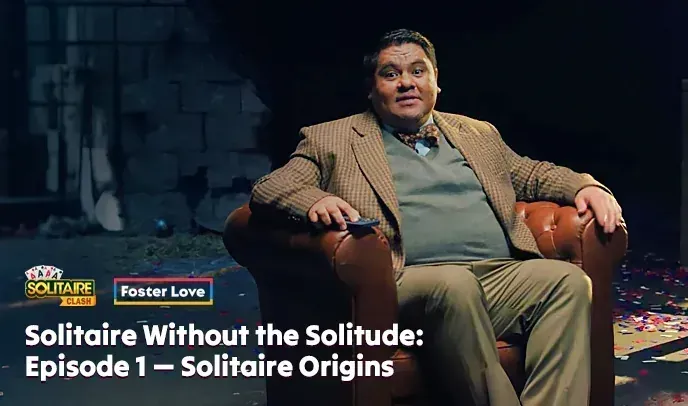
Solitaire Without the Solitude: Solitaire Clash Video Series Episode 1 — Solitaire Origins